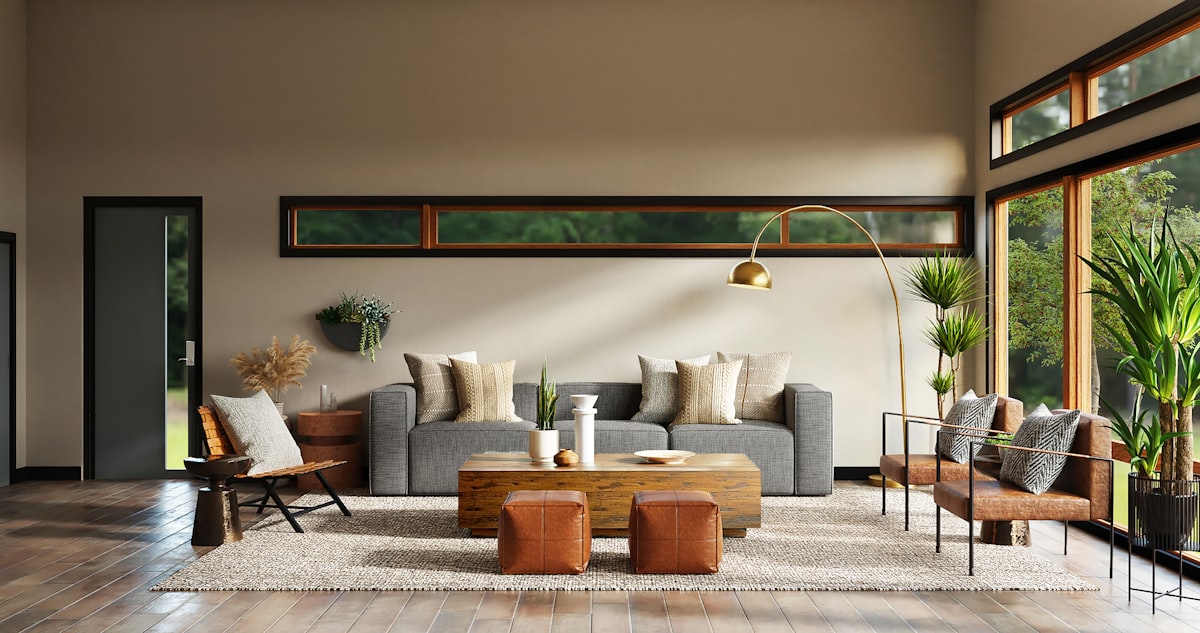
Thoughtful living room interior design sets the tone for your entire home, because it is the space where family unwinds and guests form their first impression. For Indian homes in 2026, the best living rooms balance warmth, versatility and style, working equally well for everyday relaxation and festive gatherings. This guide shares practical, inspiring ideas for layouts, colours, lighting and décor that suit every budget.
Planning Your Living Room Layout
Every great living room design starts with a layout that fits how you actually live. Before choosing a single cushion, map out the room's focal point, the flow of movement, and the seating that supports conversation. In Indian homes that often double as spaces for large family gatherings, flexible seating that can expand for guests is invaluable.
Consider the position of doors, windows and the television, and plan seating so no one has their back to the entrance. Leave comfortable walkways of at least two to three feet around furniture, and anchor the arrangement with a rug to define the space, especially in open-plan homes.
- Identify a clear focal point, such as a TV wall or window
- Arrange seating to encourage conversation
- Keep circulation paths clear and generous
- Plan for extra seating during festive gatherings
Trending Colour Palettes for 2026
Colour shapes the entire mood of a living room. For 2026, Indian homes are embracing warm, earthy palettes — terracotta, ochre, olive and clay — paired with natural textures for a grounded, inviting feel. Soft neutrals like greige and warm white remain popular as versatile backdrops that let furniture and art shine.
If you love drama, deep jewel tones such as emerald and sapphire work beautifully as accent walls or upholstery against neutral surroundings. Whatever palette you choose, balance bold colour with restraint elsewhere so the room feels curated rather than chaotic.
Free toolInterior Design Cost EstimatorBudget range for home interiors — by BHK, rooms and finish level.Try it freeSofa, Seating and Furniture Arrangement
The sofa is usually the largest investment and the heart of the room, so choose one sized to your space rather than the showroom. In compact Indian living rooms, a three-seater with a couple of accent chairs often works better than an oversized L-shaped sofa that swallows the floor.
Arrange seating around a central coffee table, keeping pieces close enough for easy conversation. Mix a substantial sofa with lighter, movable chairs so the layout can flex for guests. A well-chosen console, side tables and an ottoman add function without clutter.
A living room is not decorated by its most expensive piece, but by how effortlessly its people gather, talk and relax within it.
Lighting to Set the Mood
Lighting can make or break a living room, yet it is often the most neglected element. The trick is layering three types: ambient light for overall illumination, task light for reading or working, and accent light to highlight art, textures and architectural features.
- A statement ceiling fixture or cove lighting for ambience
- Floor and table lamps for warmth and reading
- Wall washers or spotlights to highlight art and décor
- Dimmers to shift the mood from bright to intimate
Warm white tones (around 2700–3000K) create a cosy, welcoming glow that suits living rooms far better than harsh cool light. Dimmable circuits let the same room feel bright for a family lunch and soft for an evening with friends.
TV Units and Accent Walls
The television wall is a natural focal point and a chance to add character. A well-designed TV unit combines display, concealed storage and a backdrop that ties the room together, whether through wood panelling, textured paint, stone cladding or a fluted feature wall.
An accent wall behind the seating or the TV instantly adds depth. In 2026, textured finishes, arched niches and warm wood tones are especially popular. Keep cabling concealed and integrate subtle backlighting to make the wall feel intentional and premium rather than merely functional.
Decor, Art and Indoor Plants
Décor is where your living room design becomes personal. Curated artwork, family photographs, handcrafted objects and textiles bring soul to the space. In Indian homes, incorporating regional crafts — a Warli painting, brass accents or handloom cushions — adds authentic character that mass-produced décor cannot match.
- Layer cushions and throws in complementary textures
- Hang art at eye level and group smaller pieces thoughtfully
- Add indoor plants like areca palm, money plant or snake plant
- Use mirrors to bounce light and add a sense of space
Indoor plants are a simple, affordable way to bring freshness and improve the feel of the room, and many hardy varieties thrive happily in Indian indoor conditions with minimal care.
Small Living Room Solutions
Compact living rooms, common in Indian flats, call for clever choices. Light colours, multi-functional furniture and vertical storage all help the space feel larger and work harder. A sofa-cum-bed, nesting tables and wall-mounted units free up precious floor area.
Mirrors and reflective surfaces visually double the space, while keeping the palette light and consistent avoids a boxed-in feel. Choose fewer, well-scaled pieces over many small ones, and use vertical shelving to draw the eye upward and add storage without eating into the floor.
Pulling the Look Together
A beautiful living room is more than a collection of good ideas; it is a cohesive whole where layout, colour, lighting and décor speak the same language. Deciding on a clear style and palette early keeps every subsequent choice consistent and prevents the room from feeling disjointed.
At Panache Architect, we design living rooms across Indian homes that feel personal, practical and beautifully put together, whatever your space and budget. If you would like to reimagine your living room, book a free consultation and let us craft a space your family will love.