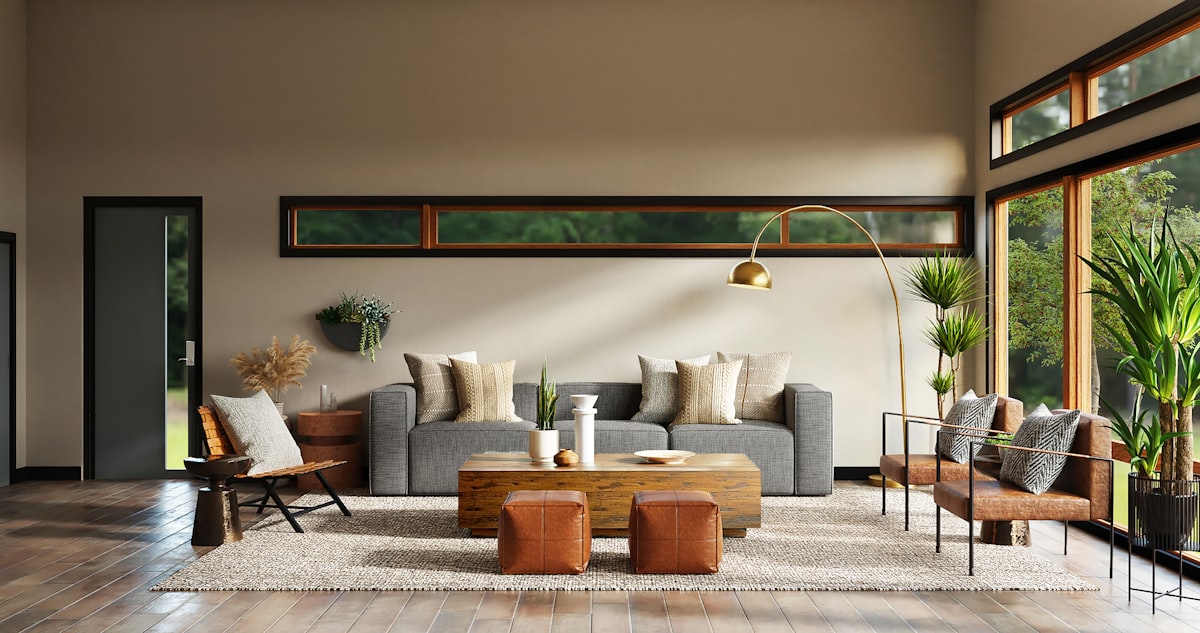
The best wall tiles living room design is usually a single feature wall, most often behind the TV or sofa, finished in large-format marble-look, stone-look, wood-look or textured 3D tiles while the other walls stay painted. In 2026, a tiled feature wall in a Delhi NCR living room typically costs about ₹100 to ₹550 per sq ft including material and fixing, so a 10' × 9' wall lands between roughly ₹9,000 and ₹50,000. Below are 15 tile ideas, the sizes that work, fixing rules and a cost table.
Tiles are one of several ways to build a feature wall. If you are still comparing tiles with paint textures, wallpaper, stone or panelling, start with our guide to the best wall finishes and textures, and for a budget panel option see PVC wall panel designs.
Why Use Wall Tiles in a Living Room
Wall tiles for living room design were once limited to dull dado bands. Today's glazed vitrified and porcelain tiles are printed in high definition, come in slab sizes up to 4' × 8', and make a wall look like marble, stone or timber at a fraction of the cost.
- Durability: Tiles do not fade, peel or absorb stains, which helps near entrances, behind sofas and in homes with children.
- Low maintenance: A damp cloth cleans most tiles; there is no repainting cycle.
- Consistency: Unlike natural marble, printed tiles have predictable colour and no lot-to-lot surprises if you buy enough at once.
- Dampness-prone walls: On ground floors or walls next to bathrooms, tiles tolerate seepage better than paint or wallpaper, although the source of dampness should be fixed first.
The limitation is warmth: a fully tiled room can feel cold and echoey. Use tiles on one wall, or one section of a wall, and balance them with fabric, wood and warm lighting.
Where to Put a Tiled Feature Wall
Choose the wall that the eye lands on first, and that has few doors or windows breaking it up.
- TV wall: The most common choice. A slab tile behind the TV, framed by wooden panels or storage, gives a clean backdrop. Plan conduits before tiling; our TV unit design ideas cover sizing and cable routing.
- Sofa back wall: Textured or wood-look tiles behind the sofa, with a picture light or wall washer above.
- Entrance or foyer wall: The first wall visitors see; stone-look or 3D tiles make an impression.
- Staircase or double-height wall: Large slabs reduce joints on tall walls, but heavy tiles at height need proper fixing (see below).
15 Living Room Wall Tile Ideas
Marble and stone looks
- 1. Book-matched marble slab tiles: Two or four slabs with mirrored veining, placed behind the TV. They give the Italian marble look for far less, and the matched pattern needs careful sequencing by the tile layer.
- 2. Statuario-look large format: White with grey veins in 1200 × 2400 mm or 800 × 1600 mm sizes. Bright and timeless, best with warm lighting so the room does not feel clinical.
- 3. Dark onyx or emperador look: Deep brown, black or green marble prints make a dramatic wall in large living rooms with good daylight.
- 4. Travertine or limestone look: Soft beige, matte and textured; very popular in 2026's warm, earthy interiors.
- 5. Slate or ledgestone tiles: Split-face stone-look tiles with real depth. They catch grazing light well but collect dust in their grooves.
Wood and texture looks
- 6. Wood-plank wall tiles: 200 × 1200 mm porcelain planks laid vertically on the TV wall give warmth without the termite or moisture worries of real timber.
- 7. Fluted or ribbed tiles: Ceramic tiles with vertical grooves mimic fluted panelling and create soft shadow lines. Compare them with wooden fluted panels before choosing.
- 8. 3D elevation tiles: Wave, cube or pebble relief tiles in matte white or grey. Keep them to a small area; a whole wall can look busy.
- 9. Concrete or cement-finish tiles: Matte grey, industrial look that pairs with black metal and leather furniture.
- 10. Brick-look tiles: Exposed brick character without the dust of real brick cladding. Works well behind a bar unit or reading corner.
Pattern and colour
- 11. Moroccan or encaustic pattern: A bold pattern panel inside a wooden frame, used as art rather than as a full wall.
- 12. Terrazzo tiles: Speckled chips in neutral or pastel base colours; playful but still easy to live with.
- 13. Glossy subway tiles: Small 75 × 300 mm tiles in a herringbone or vertical stack for a café-style niche or bar backdrop.
- 14. Two-tone split wall: Large slabs on the lower two-thirds and paint above, or a slab strip framed by paint, to control cost on big walls.
- 15. Backlit niche with tiles: A recessed niche lined with marble-look tile and a concealed LED strip, used for décor or an idol.
Tile Sizes, Finishes and Fixing
| Tile size | Look | Fixing notes |
|---|---|---|
| 300 × 600 mm / 300 × 450 mm | Traditional, more grout lines | Easy to fix, lowest wastage; suits small walls |
| 600 × 1200 mm | Clean, fewer joints | Needs flat wall and tile adhesive, not cement mortar |
| 800 × 1600 mm / 1200 × 2400 mm slabs | Near-seamless marble or stone look | Skilled team, suction lifters, levelling clips; wastage on cut-outs is costly |
| Wood planks 200 × 1200 mm | Timber panelling | Stagger joints; use a colour-matched grout |
- Finish: Matte or satin finishes hide fingerprints and reduce glare from windows and TV screens. High gloss looks rich but shows every reflection.
- Adhesive: Use a polymer-modified tile adhesive of the grade the manufacturer specifies for the tile size. Traditional cement-sand mortar is not suitable for large porcelain slabs.
- Heavy tiles at height: For slabs or stone-look tiles above head height, especially on double-height walls, ask for additional mechanical fixing or clamps as the manufacturer or engineer recommends.
- Grout: Epoxy or colour-matched grout with 2 mm joints keeps a slab wall looking seamless.
- Wall prep: The plaster must be dry, level and free of dampness. Tiling over a damp wall only hides the problem.
Living Room Wall Tiles Cost in 2026
Indicative Delhi NCR rates per sq ft of wall area for 2026. Fixing typically adds ₹40 to ₹150 per sq ft depending on tile size, with large slabs at the top of that range.
| Tile type | Material (₹/sq ft) | Material + fixing (₹/sq ft) | 10' × 9' wall (90 sq ft) |
|---|---|---|---|
| Ceramic wall tiles | ₹40 – ₹90 | ₹100 – ₹160 | ₹9,000 – ₹14,400 |
| Glazed vitrified (GVT), 600 × 1200 | ₹60 – ₹200 | ₹130 – ₹280 | ₹11,700 – ₹25,200 |
| 3D elevation / textured tiles | ₹80 – ₹250 | ₹140 – ₹330 | ₹12,600 – ₹29,700 |
| Large-format porcelain slabs | ₹150 – ₹400 | ₹250 – ₹550 | ₹22,500 – ₹49,500 |
| Stone-look split-face tiles | ₹120 – ₹350 | ₹180 – ₹450 | ₹16,200 – ₹40,500 |
Add 8–10% extra tiles for cutting and future repairs (more for slabs and book-matched patterns), plus any lighting. Our tile calculator works out the number of tiles and boxes for your wall size.
Common Mistakes to Avoid
- Tiling every wall of the living room, which makes it feel like a lobby.
- Choosing the tile from a small showroom sample; view a full slab, in daylight, before ordering.
- Forgetting switchboards, TV brackets and AC pipes; cut-outs in slabs must be marked before fixing.
- Mixing a busy floor tile with a busy wall tile. One patterned surface is enough.
- Buying tiles in instalments, which risks shade variation between batches.
Design Your Living Room Feature Wall
A tiled feature wall works best when it is planned with the TV unit, lighting and ceiling from the start, rather than added at the end. Our interior design team can shortlist tiles, detail the joints and cut-outs, and supervise fixing so the wall looks as good as the render. Book a free consultation for a feature wall plan and estimate for your living room.