
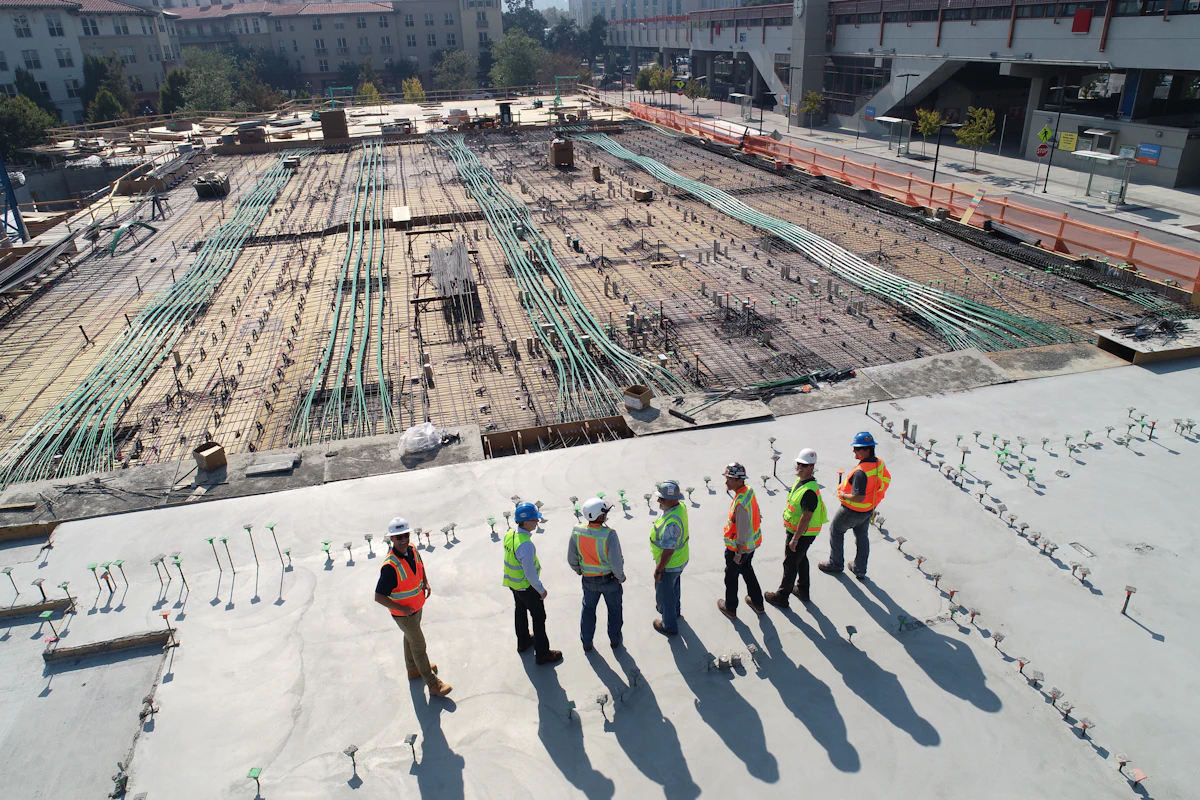
The best TMT bar for house construction in Delhi NCR is usually a BIS-certified Fe 500D grade bar, because it combines good strength with the higher ductility that matters in a seismically active region. The "D" grade, the right bar diameters for each element and genuine weight-checked supply matter far more than which well-known brand you buy. This guide explains TMT grades, Fe 500 vs Fe 550, how much steel is required per sq ft, and how to check bars at site.
What TMT Bars Are and Why the Grade Matters
TMT (thermo-mechanically treated) bars are the ribbed steel reinforcement inside every column, beam, slab and footing. After rolling, the hot bar is quenched with water so the outer layer hardens while the core stays softer and ductile. The result is a bar that is strong on the surface yet bends rather than snaps under extreme load.
Concrete is strong in compression but weak in tension; the steel carries the tension. In an earthquake, the frame must flex and absorb energy without sudden failure, which is why ductility, not just strength, decides the right bar for a house. Delhi NCR lies in a seismic zone where this is a real design consideration, not a sales pitch.
TMT Bar Grades Explained
TMT reinforcement in India is made to IS 1786. The number in the grade is the minimum yield strength in N/mm² (MPa). A "D" suffix means the bar meets tighter chemistry and higher ductility requirements, including greater minimum elongation, than the plain grade of the same strength.
| Grade | Min. yield strength | Ductility | Typical use in houses |
|---|---|---|---|
| Fe 415 | 415 MPa | High | Older designs, small load-bearing homes; now less common |
| Fe 500 | 500 MPa | Moderate | General residential RCC in low-risk areas |
| Fe 500D | 500 MPa | Higher | Most common choice for homes in NCR and other seismic zones |
| Fe 550 / Fe 550D | 550 MPa | Lower / higher | Multi-storey and heavily loaded members where the engineer wants less steel |
| Fe 600 | 600 MPa | Lower | Special structures; rarely needed in houses |
Your structural drawings will state the grade. Never substitute a different grade on site without the engineer recalculating, because bar sizes and spacing are designed for a specific yield strength.
Free toolConstruction Cost CalculatorApproximate cost to build your house — floor-wise, city-wise, by quality.Try it freeFe 500 vs Fe 550: Which Is Better for a House?
Fe 550 is stronger, so in theory a design using it needs slightly less steel. For a typical G+1 or G+2 home, though, the saving is small and comes with trade-offs:
- Ductility: plain Fe 550 is less ductile than Fe 500D. If a higher grade is used, it should be the D variant.
- Bending: higher-strength bars are stiffer to bend for stirrups and hooks, and poor bending on site can crack them.
- Availability: Fe 500D is stocked in every size by most NCR dealers; Fe 550D can be harder to source consistently.
- Design minimums: many house members are governed by minimum steel rules and bar spacing, so higher grade does not always reduce steel.
For most independent homes, Fe 500D is the practical sweet spot. Fe 550D makes more sense in larger multi-storey or commercial buildings where the engineer can actually use the extra strength.
Buy the grade on the drawing, in the sizes on the bar bending schedule, and weigh what arrives. That simple discipline prevents most steel problems on a house site.
TMT Bar Sizes, Weights and Where They Go
TMT bars are sold by weight but specified by diameter. The standard weight per metre is d² ÷ 162 (d in mm), which lets you check that a bundle is not under-weight.
| Diameter | Weight per metre | Weight per 12 m bar | Typical use in a house |
|---|---|---|---|
| 8 mm | 0.395 kg | 4.74 kg | Stirrups, column ties, slab distribution bars |
| 10 mm | 0.617 kg | 7.41 kg | Slab main bars, lintels, chajjas |
| 12 mm | 0.888 kg | 10.66 kg | Beams, columns of small houses, footing mesh |
| 16 mm | 1.58 kg | 18.96 kg | Columns, main beam bars, footings |
| 20 mm | 2.47 kg | 29.63 kg | Heavier columns and beams, larger spans |
| 25 mm | 3.86 kg | 46.30 kg | Rare in homes; heavily loaded columns or transfer beams |
Steel Required Per Sq Ft for a House
A widely used thumb rule for RCC-framed houses is about 4 kg of TMT steel per sq ft of built-up area. At an indicative 2026 rate of about ₹65 per kg, that is roughly ₹260 of steel for every sq ft you build.
| Built-up area | Steel (approx.) | Approx. cost at ₹65/kg |
|---|---|---|
| 1,000 sq ft | 4,000 kg (4 tonnes) | ₹2.6 lakh |
| 1,500 sq ft | 6,000 kg | ₹3.9 lakh |
| 2,400 sq ft (G+1) | 9,600 kg | ₹6.24 lakh |
Actual steel varies with spans, floor count, soil, basement and the structural system. As rough per-element guides, engineers often see about 80 – 110 kg per cubic metre of concrete in slabs, somewhat more in footings, and considerably more in columns and beams. The only reliable figure is the bar bending schedule prepared from your structural drawings. For the full material list, see our house construction cost per sq ft guide.
TMT Bar Brands and Price Ranges
We do not rank brands. Every TMT bar sold with a BIS licence must meet IS 1786 for its grade. In NCR you will find two broad categories:
- Primary producers: large integrated steel makers that produce steel from iron ore, such as SAIL, Tata Tiscon, JSW Neosteel and Jindal Panther. They usually cost more per kg and offer wide availability and test certificates.
- Secondary producers: regional mills that make steel from scrap or sponge iron through induction furnaces and rolling mills. Many are BIS-certified and priced lower, but quality control varies from mill to mill.
Indicative 2026 prices for Fe 500D in NCR range roughly from ₹58 – ₹65 per kg for BIS-certified secondary brands to ₹65 – ₹78 per kg for primary producers, before GST, cutting and transport. Our cost guides use an average of ₹65 per kg. Prices change weekly with the steel market, so compare quotes on the same day, for the same grade, delivered to site.
Corrosion-resistant (CRS) and epoxy-coated bars are worth discussing with your engineer for basements, coastal projects or wet foundations, though good concrete cover and dense concrete remain the first line of defence.
How to Check TMT Bars at Site
- BIS mark and licence number: embossed or tagged on the bars, matching the invoice.
- Grade and brand marking: rolled on the bar at regular intervals.
- Test certificate: ask for the mill test certificate for the batch showing yield strength, tensile strength, elongation and chemistry.
- Weight check: weigh a few bars and compare with the table above; bars are billed by weight, so under-weight bars mean less steel in your structure.
- Surface: light surface rust is normal; flaking rust, pitting or cracks at ribs are not.
- Bend test: a sample bent around the specified mandrel should show no cracks on the outer face.
- Storage: keep bars off the ground on supports, sorted by diameter, and covered during the monsoon.
Steel checks go hand in hand with good concrete. Our guides to the best cement for house construction and RCC slab cost cover the other half of the RCC frame.
Get Your Structure Designed and Checked
The best TMT bar for house construction is the grade your structural engineer designs for, in the right diameters, placed with correct cover, laps and stirrup spacing. Panache Architect prepares structural drawings and bar bending schedules through our structural and MEP design service and checks reinforcement before every pour. Estimate your overall budget with the construction cost calculator, then book a free consultation for a material specification and estimate for your home.


