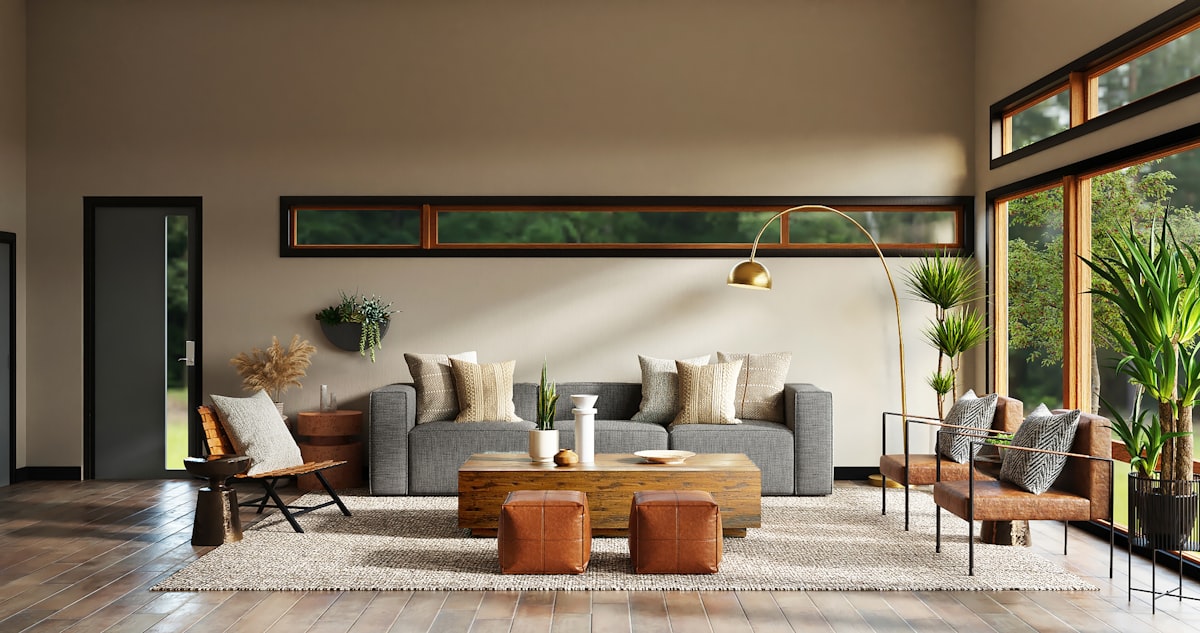
Good lighting design for home interiors layers three or four kinds of light in every room (general ambient light, task light where you work, accent light on features, and a decorative fitting where it adds character) and puts each layer on its own switch. Choose the colour temperature by room, warm 2700K–3000K for living and bedrooms and neutral 4000K for kitchens and work areas, and fix the lighting plan before the false ceiling and wiring are done. This guide covers the layers, fixture types including profile lights, a room-by-room plan, switching and indicative 2026 costs.
The Four Layers of Home Lighting
A room lit by a single bright fitting in the centre of the ceiling looks flat and tires the eyes. Layering solves this.
- Ambient (general) light: the base level that lets you move around safely. Recessed downlights, a cove, or a central fitting on a plain ceiling.
- Task light: focused light where you read, cook, shave or work. Under-cabinet strips in the kitchen, a mirror light in the bathroom, a reading lamp at the bed.
- Accent light: directional light that picks out a textured wall, artwork, a mandir or a display shelf. Adjustable spots, wall washers and linear lights.
- Decorative light: a pendant over the dining table, a chandelier in a double-height space, a statement wall light. It sets the style but rarely does the real lighting work.
Not every room needs all four, but every main room needs at least two, switched separately, so you can change the mood without changing the fittings.
Colour Temperature, CRI and Glare
LED fixtures are sold by wattage and lumens, but three other specifications decide whether a room feels right.
| Colour temperature | Look | Where it suits |
|---|---|---|
| 2700K | Warm, like incandescent | Bedrooms, cove lighting, pooja room, restaurant-style dining |
| 3000K | Warm white | Living and dining rooms, corridors, bed back walls, most accent lighting |
| 4000K | Neutral white | Kitchen counters, study, home office, bathrooms, utility |
| 5700K–6500K | Cool daylight | Garages, stores and task areas only; feels harsh in living spaces |
- Keep one temperature per room layer: mixing 3000K cove with 6500K downlights in the same room looks patchy.
- Colour rendering (CRI): choose CRI 90 or above for kitchens, dressing areas and bathrooms, where skin tones and food colour matter. CRI 80 is acceptable for corridors and utility spaces.
- Glare: deep-recessed or anti-glare downlights avoid the bright dot you see when you look up. Never put a bright downlight directly over a bed pillow or a sofa headrest.
Fixture Types and Where to Use Them
Costs below are indicative 2026 supply prices for branded fixtures in Delhi NCR; installation, wiring changes and drivers can add to them.
| Fixture | Best use | Indicative cost |
|---|---|---|
| Recessed downlight (panel or deep-recessed) | Ambient light in false ceilings | ₹300 – ₹1,500 each |
| COB spotlight (adjustable) | Accent on walls, art and display | ₹400 – ₹2,500 each |
| Profile light (aluminium channel with diffuser) | Linear ambient or accent light in ceilings, walls, wardrobes | Roughly ₹350 – ₹1,000 per running ft |
| Cove LED strip | Soft indirect light behind a ceiling or headboard lip | Roughly ₹40 – ₹120 per running ft |
| Track light | Flexible accent light in living rooms and plain ceilings | Varies widely with track length and spot count |
| Pendant or chandelier | Decorative light over dining, island or double-height areas | ₹2,000 to well above ₹50,000 |
| Wall light and wall washer | Corridors, stairs, bed walls, facade | ₹800 – ₹6,000 each |
| Under-cabinet strip | Task light on kitchen counters | Low; mainly strip and driver cost |
Profile Lights: How to Use Them Well
Profile lights are LED strips set inside a slim aluminium channel with a frosted diffuser, giving a continuous line of light rather than a row of dots. They are the most requested fixture in NCR interiors right now, and also the most overused.
- Recessed or surface: recessed profiles need a false ceiling or a groove in the wall panel and look cleanest; surface profiles work on a plain slab or inside furniture.
- Good places: a single line over the kitchen counter, a border around a floating ceiling, the edge of a TV wall, inside wardrobes and along stair handrails.
- Keep lines purposeful: lines that follow the furniture or architecture look designed; random criss-crossing lines date quickly.
- Diffuser quality: a good opal diffuser and a strip with closely spaced LEDs avoid visible dots.
- Driver access: every run needs a driver. Place drivers where you can reach them through an access panel; a failed driver hidden inside a sealed ceiling is a costly repair.
Room-by-Room Home Lighting Ideas
- Living room: warm downlights or a cove for ambient light, adjustable spots on the feature wall or art, a floor lamp by the reading chair. Dim the ambient layer in the evening.
- Dining: a pendant or linear fitting centred on the table, not the room, hung about 30 to 32 inches above the tabletop, plus dimmable ambient light.
- Kitchen: 4000K downlights for general light, under-cabinet strips so you never work in your own shadow, and a separate switch for any profile or display light.
- Bedroom: warm cove or profile light on a dimmer, individual reading lights and two-way switching at the bed. Our master bedroom design guide covers switch and socket positions.
- Bathroom: light the face from the front with a mirror light rather than from directly above, and use fittings rated for damp areas near the shower.
- Pooja room: warm, soft light on the deity from the front or sides; a backlit jali or panel adds depth.
- Stairs and corridors: low wall lights or step lights, with two-way or sensor switching at each end.
- Balcony and facade: outdoor-rated fittings with a suitable weatherproof rating, on a timer.
Planning Circuits, Switches and Controls
Most lighting problems in finished homes are switching problems. Settle these on the electrical drawing before wiring starts:
- One switch per layer: ambient, task and accent on separate switches, so each room has at least two or three lighting controls.
- Two-way switching: at both ends of corridors and stairs, and at the door and bed in bedrooms.
- Dimmers: on cove and ambient circuits in living, dining and bedrooms. Check that the LED driver is dimmable and matches the dimmer type.
- Smart control: if you want scenes or app control, plan neutral wires and deeper switch boxes now. Our guide to home automation in India explains wired and wireless options.
- Coordinate with the ceiling: light positions depend on beams, AC units and fan points, so draw the lighting and false ceiling design together.
What Home Lighting Costs in 2026
Lighting is usually a modest share of the interior budget, but it is the part that most changes how finished rooms feel. In our interior cost calculator, lighting is included within each room's budget along with ceilings and finishes. As a rough guide, the extra spend between a basic and a well-designed lighting scheme comes mostly from three things: the number of profile runs, the quality of drivers and dimmers, and decorative fittings. Put money into good drivers and anti-glare downlights first; a statement chandelier can come later.
Common mistakes to avoid:
- Too many downlights in a grid, giving flat light and a ceiling full of holes
- Cool 6500K light in living rooms and bedrooms
- No task lighting under kitchen wall cabinets
- Drivers sealed inside ceilings with no access panel
- Choosing fittings before the furniture layout is final, so lights miss the table, bed or TV wall
Get a Lighting Plan for Your Home
A lighting plan is a drawing, not a shopping list: it fixes every fitting, switch and circuit to the furniture layout before the electrician starts. Panache Architect prepares lighting and ceiling plans as part of our interior design service across Gurugram, Delhi, Noida and the NCR. Book a free consultation and we will suggest a layered lighting scheme and budget for your home.